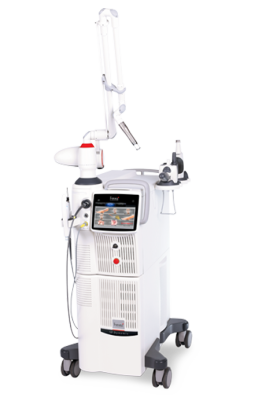
In laser applications, the technical structure of the system is important, but so is the selection of the appropriate wavelength for the target tissue and intended clinical purpose. Fotona SP Dynamis is a laser platform that combines Er:YAG and Nd:YAG laser sources within the same system. The intended application is determined according to the individual's skin characteristics, clinical needs, and physician assessment.
Fotona SP Dynamis Features
Fotona SP Dynamis incorporates laser sources operating at wavelengths of 2940 nm Er:YAG and 1064 nm Nd:YAG. The Er:YAG source has a power output of 20 W and an energy output of up to 3 J. The Nd:YAG source provides a power output of 80 W and an energy output of up to 50 J.
The system offers different pulse durations and application modes. Parameters are assessed together with factors such as energy density, pulse duration, treatment area, and tissue characteristics. A single technical parameter alone is not sufficient to determine an individualized treatment plan.
| Application Mode |
General Application Approach |
| MSP |
Very short Er:YAG pulses |
| SP |
Short-duration Er:YAG pulses |
| LP |
Longer-duration energy delivery |
| VLP |
Extended pulse duration |
| XLP |
Very long pulse duration |
| SMOOTH |
A mode designed to distribute thermal effects over time |
What Is Fotona SP Dynamis Used For?
Er:YAG and Nd:YAG laser technologies may be considered for different clinical purposes, ranging from applications targeting superficial skin layers to procedures in which a thermal effect in deeper tissues is intended.
However, not every laser application is appropriate for every individual. Skin type, active skin conditions, medications, previous wound-healing history, the treatment area, and the intended clinical outcome should all be assessed before treatment planning.
Er:YAG and Nd:YAG Laser Technologies
Different laser wavelengths interact at varying levels with chromophores in tissue, including water, melanin, and hemoglobin. For this reason, laser selection is based not simply on the name of the device but on the characteristics of the target tissue and the intended clinical application.
Interaction of Er:YAG Laser with Tissue
The Er:YAG laser operates at a wavelength of 2940 nm, which is strongly absorbed by water. This characteristic is relevant in applications where controlled removal of superficial tissue or a thermal effect concentrated closer to the skin surface is intended.
In clinical practice, 2940 nm Er:YAG laser technology may be used in selected skin resurfacing procedures and in treatments intended to improve the appearance of certain types of scars. The suitability and parameters of the procedure should be determined by a physician following individual assessment.
Interaction of Nd:YAG Laser with Tissue
The Nd:YAG laser operates at a wavelength of 1064 nm and may reach relatively deeper tissue structures. It can be used in applications where a controlled thermal effect is intended without ablating the skin surface.
In dermatological practice, this wavelength may also be considered for procedures involving structures around the hair follicle and for selected vascular targets. Appropriate use depends on the target tissue, skin characteristics, and physician assessment.
Applications That May Be Performed with Fotona Dynamis
Applications that may be performed with the system vary according to the laser source used, energy parameters, treatment area, and the clinical objective determined by the physician.
Laser Applications Targeting the Skin Surface
In applications targeting the skin surface, the primary objective is to create a controlled laser effect within superficial tissue.
Er:YAG-based procedures may be considered for skin resurfacing, treatments intended to reduce the appearance of selected scars, and certain applications involving superficial skin lesions where clinically appropriate.
The indication, treatment parameters, and suitability of the procedure should be determined following medical examination.
Applications Targeting Skin and Deeper Tissue Structures
When deeper tissue structures are targeted, the distribution of laser energy and the resulting thermal effect are taken into consideration.
Nd:YAG laser applications may be evaluated for different tissue targets, including structures surrounding hair follicles and selected vascular structures. Suitability depends on the characteristics of the target tissue as well as the individual's skin type and clinical condition.
Protocols for the Eye Area, Lips, and Face
Laser protocols involving the eye area, lips, and other facial regions require specific assessment because of the anatomical characteristics and sensitivity of these areas.
The physician may consider factors such as skin thickness, pigmentation tendency, previous procedures, anatomical features, and the intended clinical objective when selecting appropriate treatment parameters.
Other Laser Application Areas
Other areas of laser application may vary according to the wavelength used and the clinical indication.
For this reason, the scope of treatment should be determined primarily according to the individual's medical assessment and clinical requirements rather than solely according to the range of treatment modes available on the device.
| Assessment Factor |
Consideration During Physician Evaluation |
| Skin phototype |
Assessment of the risk of pigmentation changes |
| Active infection or irritation |
Whether the procedure should be postponed |
| Previous laser procedures |
Previous exposure of the skin to energy-based treatments |
| Medication and product use |
Assessment of photosensitivity and factors that may affect healing |
| Treatment area |
Anatomical sensitivity and characteristics of the target tissue |
Frequently Asked Questions
- Which laser technologies are included in Fotona Dynamis?
The system includes Er:YAG and Nd:YAG laser sources.
- What is the difference between Er:YAG and Nd:YAG lasers?
Er:YAG operates at a wavelength of 2940 nm, while Nd:YAG operates at 1064 nm. Their interaction with tissue, depth of penetration, and clinical applications differ.
- What applications can be performed with Fotona Dynamis?
Depending on the laser source, parameters, treatment area, and clinical assessment, the system may be used for different applications ranging from superficial skin procedures to procedures targeting deeper tissue structures.
- Why is wavelength important in laser applications?
Different laser wavelengths interact differently with chromophores such as water, melanin, and hemoglobin. This affects how laser energy is absorbed and how it reaches the intended target tissue.
- Is the same laser protocol used for everyone?
No. Treatment planning may vary depending on skin type, medical history, treatment area, clinical indication, and physician assessment.
- How is the number of laser treatment sessions determined?
The number and frequency of sessions are determined according to the treatment objective, the individual's response, the area being treated, and the physician's clinical assessment.
This content is provided for general informational purposes only and does not constitute a diagnosis or an individualized treatment recommendation. Suitability for laser procedures should be determined through a medical examination and physician assessment.