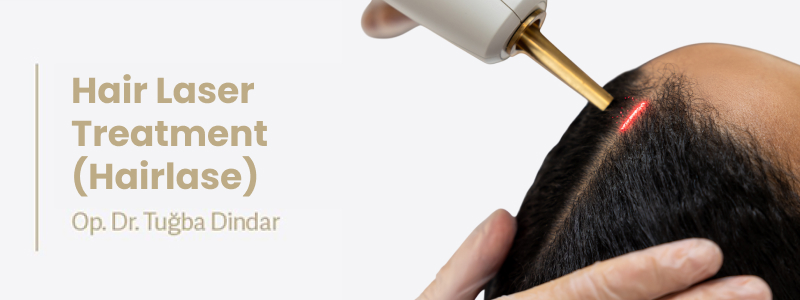
Hair loss is a common concern for both women and men. Depending on the underlying cause, hair shedding can occur in specific areas (localized) or across the entire scalp. The most frequent triggers include genetic factors, hormonal changes, stress, lifestyle habits, and environmental influences. In some cases, certain medications or medical conditions may also contribute to increased hair fall and thinning.
With advancements in medical technology, non-surgical hair loss treatments have become increasingly popular. One of the widely used options is Hair Laser Treatment (Hairlase), a comfortable and effective procedure designed to stimulate hair follicles. The main objective of Hairlase is to support weakened hair strands, help improve follicle function, and slow down the progression of hair loss.
For visitors looking for hair treatment options in Turkey, Tekirdag near Istanbul can be an advantageous location for clinical evaluation and hair therapy planning.
What Is Hair Laser Treatment (Hairlase)?
Hairlase is a non-surgical hair restoration treatment performed using low-level laser light. In its simplest definition, Hairlase aims to stimulate hair follicles with laser waves to support stronger, healthier hair growth.
The laser energy used in this method does not damage tissue. Since it does not generate heat, the risk of burns or irritation is considered low. This procedure is based on biological effects at the cellular level, supported by scientific principles, and can be applied to both women and men.
When a patient is found to be a suitable candidate, Hairlase may be recommended for:
- localized hair loss,
- diffuse thinning,
- early-stage hair shedding,
- weakened hair quality due to fragile strands.
Because it is a non-invasive method, Hairlase does not require scalp incisions, anesthesia, or stitches. The main goal is to improve the metabolic activity of hair follicles and enhance their functional capacity.
How Does Hairlase Work?
During the procedure, laser pulses are delivered very close to the scalp. The laser light penetrates toward the follicle level and supports the strengthening of weakened hair roots. As a result, the treatment aims to reduce shedding and improve overall hair quality.
Hairlase may also support an increased hair growth rate. One of the reasons is its effect on microcirculation enhanced blood flow can help deliver more oxygen and nutrients to the follicles, supporting healthier hair production.
How Hairlase Helps With Hair Loss
In many cases, hair loss begins when hair follicles weaken and the natural hair production cycle becomes disrupted. When shedding accelerates, thinning areas can appear, and localized bald patches may develop. This can significantly affect confidence and overall appearance.
Hairlase addresses this issue through follicle stimulation. Laser waves help activate hair follicles and may support the restoration of a healthier hair growth cycle. This stimulation can contribute to increased cellular energy production, which supports follicle function.
In addition, improved circulation allows more nutrients and oxygen to reach the follicles. For this reason, Hairlase is also preferred not only for hair loss control but also for improving hair thickness and overall hair quality.
Treatment Process and Session Schedule
Hairlase is considered a clinical hair laser therapy method and is always planned on an individual basis. Before starting treatment, the first step is determining whether the person is a suitable candidate. This requires a detailed analysis of the hair and scalp. The type, severity, and duration of hair loss are evaluated, along with the patient’s general health status and the underlying causes of shedding.
Based on this assessment, a personalized treatment plan is created, including the session duration and frequency.
The procedure generally begins with cleansing and preparing the scalp. Then, low-level laser energy is applied to the planned areas. During the session, patients typically do not feel pain, discomfort, or soreness—this is also why anesthesia is not required.
Session duration may vary between individuals, but it is usually around 20 to 30 minutes.
Session intervals also differ depending on the case. Treatment can be applied:
- once per week , or
- twice per week , depending on clinical evaluation.
The total number of sessions is also personalized. In many cases, a course of 8 to 12 sessions is recommended, although the program can be shorter or longer based on response and individual needs.
Because Hairlase is a non-surgical treatment, patients can return to daily life immediately after the session. No clinical recovery period or downtime is typically required.
Who Is Hairlase Suitable For?
Hairlase hair laser treatment can be a suitable option for individuals who need follicle support and strengthening. It can be applied to both women and men experiencing hair shedding due to various causes.
This treatment may be particularly beneficial in the early stages of hair loss, when thinning begins and follicles are still active. It can also be considered when hair strands become noticeably finer and the person starts to feel a reduction in hair density.
A frequently asked question is whether Hairlase can be used after hair transplantation. In selected cases, Hairlase can be applied after hair transplant as a supportive approach to strengthen follicles and improve scalp conditions. However, candidacy should always be confirmed through physician evaluation.
In certain situations—such as pregnancy, active infections, severe dermatological diseases, or conditions causing light sensitivity medical assessment is essential. For some individuals in this group, Hairlase may not be an ideal option. Suitability must be determined by a physician.
Benefits of Hairlase Hair Laser Treatment
The most important advantage of Hairlase is that it is non-surgical. Since it does not involve surgery, there is typically no need for incisions, anesthesia, stitches, or downtime. This makes it a comfortable option for many patients.
Additional benefits include:
- No interruption to daily life: work and routine activities can usually continue immediately after each session.
- Supports natural hair and scalp structure: the procedure does not harm the scalp or hair’s natural integrity.
- Chemical-free approach: no chemical solutions are used, making it suitable for individuals with sensitive scalp or hair structure.
- Can be combined with supportive treatments: Hairlase may be used alongside PRP (Platelet-Rich Plasma) or hair mesotherapy as part of a comprehensive hair loss treatment plan.
- Comfortable sessions: the procedure is generally painless, supporting high patient comfort throughout the process.
Expected Results After Hairlase Treatment
Results from Hairlase hair laser therapy are not the same for every individual. Treatment outcomes may vary depending on personal factors, which is why it is not possible to present a fixed “standard result” that applies to everyone.
Several variables influence the effectiveness of hair laser treatment results, including:
- the underlying cause of hair loss,
- how long shedding has been present,
- the general condition of the hair and scalp,
- genetic predisposition,
- and the stage of hair thinning.
These factors also affect the recommended number of sessions and the total treatment course.
In many cases, Hairlase may help improve overall hair appearance by supporting thicker hair strands and a healthier-looking scalp. After treatment begins, some individuals may also notice a gradual reduction in shedding over time.
Hair Laser Treatment Cost (Hairlase Pricing in Turkey)
Hair laser treatment pricing can vary significantly, because the treatment plan depends on several clinical variables. Factors that may influence Hairlase cost include:
- the laser technology used,
- the number of sessions recommended,
- the total course duration,
- and the size of the affected hair loss area.
For this reason, it is not possible to provide a single fixed price that applies to every patient.
Before treatment begins, the hair and scalp should be clinically evaluated. After assessment, an individualized plan is created, and the patient can be informed with a clear cost estimate based on the recommended session schedule.
To request an appointment or learn more about Hairlase treatment planning, the contact page can be used for consultation scheduling.