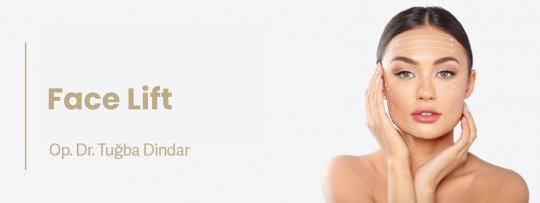
A facelift (rhytidectomy) can be performed as a standalone aesthetic procedure, or it may be combined with other surgeries depending on individual needs-most commonly with a neck lift or a temporal (temple) lift. With aging, the facial skeleton and fat compartments gradually lose volume. At the same time, the skin and underlying soft tissues (including muscles and connective tissue layers) lose elasticity and firmness.
As a result, aging may appear as:
- increased facial wrinkles
- downward sagging around the eyes, cheeks, and neck
- loss of facial volume, leading to a flatter or hollow look
- subtle shrinkage of the upper face
- sagging and heaviness in the lower face, especially along the jawline (jowls)
Modern facelift techniques aim to restore facial harmony by improving tissue position and tightening structures in a controlled way. In many suitable patients, facelift surgery may provide a rejuvenating effect that can make the face appear approximately 10-15 years younger, while maintaining a natural appearance.
Depending on the degree of facial deformation and sagging, some patients may benefit from a facelift alone. However, it is frequently performed together with procedures such as upper/lower eyelid surgery (blepharoplasty) and neck lift surgery, especially when signs of aging involve both the face and neck.
When facelift surgery is combined with eyelid aesthetics, the refreshed facial contours are supported by a more youthful appearance around the eyes. Since the eye area strongly affects how "young" or "tired" a person looks, eyelid surgery can play an important complementary role in overall facial rejuvenation. More detailed information about eyelid aesthetics and related treatments can also be found in other sections of the website.
For details about the procedure and a personalized evaluation of facelift costs, you may contact the clinic.
One of the most important factors in facelift surgery is choosing a surgeon with specialized experience in facial anatomy and facelift techniques. Facelift procedures are designed to improve visible signs of aging; however, outcomes and longevity vary depending on tissue quality, skin elasticity, lifestyle factors, and the chosen technique. Because facial aging continues over time, the surgical plan should also consider long-term tissue preservation and potential future needs.
A key principle of modern facelift surgery is protecting facial function. During the procedure, particular attention is paid to avoiding injury to the facial nerve branches that control facial expression. For this reason, facelift surgery should be performed by experienced surgeons who have a detailed understanding of facial anatomy and safe tissue planes.
Mini Facelift vs Full Facelift (How the Technique Is Chosen)
The most appropriate technique is selected based on the degree of facial sagging, volume loss, and tissue descent.
Mini Facelift (Limited Facelift)
A mini facelift may be preferred when facial aging is mild to moderate. In this technique, tightening is focused on the most affected region rather than the entire face. A frequently applied approach is midface lifting, which addresses descent in the cheek area and early jowl formation.
Mini facelift is considered for patients who:
- do not need a full facelift
- have sagging that cannot be adequately improved with non-surgical treatments
- want improvement with more limited intervention
In many patients, facial sagging is accompanied by loss of fat volume. For this reason, mini facelift surgery is often combined with fat injection (fat grafting / fat transfer) to improve facial fullness and provide a more balanced rejuvenation.
Fat Injection (Fat Transfer) During Facelift
Fat transfer involves harvesting a small amount of fat from the patient's own body and transferring it to facial areas that require volume restoration. This approach may be used to improve:
- midface volume loss
- cheek flattening
- contour irregularities
When performed conservatively and with proper technique, fat transfer can support a natural-looking facial rejuvenation.
Hidden Incisions and Scar Placement
All surgical incisions heal with some degree of scarring; however, in facelift surgery, incisions are typically placed in areas where scars are well concealed, such as:
- within the hairline
- around the ear contours
- behind the ear
- in selected techniques, inside the mouth or small hidden scalp incisions
Because scars are usually hidden in these natural anatomical areas, facelift surgery is sometimes described as "scar-concealed" rather than scar-free.
If eyebrow descent is present, the eyebrow may sometimes be supported through the same incision used during eyelid surgery (blepharoplasty), improving rejuvenation around the eyes. In some individuals, rejuvenation of the eye region alone can significantly change how young or refreshed the face appears.
Full Facelift (Total Face Lifting)
A full facelift is generally suitable for patients with more advanced facial aging, typically in middle age or beyond, where sagging is more pronounced.
In a full facelift, the incision commonly begins at the temple (temporal area), continues down in front of the ear, follows the natural contours around the ear, and extends behind the ear into the hair-bearing scalp. If additional improvement is needed under the chin (submental area), a small incision may also be made beneath the chin.
Through these access points:
- deeper tissues under the skin are carefully reached
- facial tissues are repositioned upward in a controlled manner
- excess skin is removed
- the contouring and tightening are completed
Post-operatively, scars may initially appear slightly pink or red for several weeks. Over time, they typically fade and become less noticeable, often approaching the natural skin tone.
Deep Plane Facelift Technique
Facelift surgery can be performed using different "planes" (tissue layers). One advanced approach is the deep plane facelift, where the surgeon works on deeper anatomical layers to reposition facial structures more comprehensively.
With a deep plane technique:
- deeper support tissues are released and repositioned
- facial contour improvement may be more significant in selected patients
- cheek definition (malar area) may appear more restored
- jawline and neck contours can become more defined
This technique can be a good option in patients who may not respond adequately to more superficial lifting methods. Some clinical observations suggest that deep-plane approaches may provide longer-lasting improvements in certain individuals, depending on tissue characteristics and aging patterns. Because work is performed deeper, carefully selected cases may also experience less surface trauma, which can support reduced bruising and swelling-although recovery still varies individually.
Facelift Combined With Neck Lift (Face and Neck Rejuvenation)
Facelift surgery can be performed alone or combined with neck lift surgery based on anatomical needs. When performed together, both procedures are planned within the same surgical session.
In combined face and neck lifting:
- the incision can be extended behind the ear toward the hairline to access the neck area
- neck muscles may be tightened
- the neck skin and tissues are repositioned
- excess skin is removed
- incisions are closed carefully
If there is excess fat in the double chin (submental) region or neck area, liposuction may also be included as part of the procedure to support better contouring.
Anesthesia, Duration, and Hospital Stay
Facelift and neck lift surgery are typically performed under general anesthesia in an operating room setting.
Approximate procedure durations:
- Mini facelift: around 2-3 hours
- Full facelift: around 4-5 hours
A surgical drain may be placed temporarily to prevent fluid collection or hematoma formation under the skin. Many patients stay in the hospital for one night for observation and early post-operative monitoring.
Surgical drains are usually removed the next day. After drain removal and a clinical assessment, patients are typically discharged.
In the first few days following facelift surgery, it is normal to experience:
- facial swelling
- mild to moderate bruising in certain areas
To support healing and help control swelling, a special facial compression mask / supportive bandage designed for facelift recovery is applied to the face and neck region. This garment is commonly worn:
- continuously for the first one week, and
- for an additional one week at night, depending on the surgeon's recommendation.
Most swelling significantly improves within the first 10 days, although the recovery timeline varies between individuals. The face gradually settles into its final shape over time, and facial expressions typically return to their natural baseline within approximately one month.
Overall, facelift recovery is a progressive process, and as healing advances, patients often notice a more refreshed, firmer, and younger-looking facial appearance.
Non-Surgical Facelift Techniques (Thread Lift / Suspension Technique)
In recent years, many patients who experience facial sagging or visible deformity-but prefer to avoid classic facelift surgery-have shown interest in thread lifting, also known as a non-surgical facelift or suspension technique. In a thread lift procedure, specially designed medical threads are placed under the skin to help lift and support sagging tissues.
These threads often contain barbs (tiny anchors) or advanced structural designs that allow the physician to gently reposition soft tissues upward. The threads are typically introduced through small entry points-commonly near the hairline or around the cheekbone area-and then guided toward the regions with sagging. Once positioned, the tissues are lifted to improve facial contour.
How Many Threads Are Used? What Types of Threads Exist?
In many cases, approximately 4-5 pairs of threads may be used depending on the treatment plan and degree of sagging.
Thread lift materials generally fall into two categories:
- Absorbable threadsThese threads gradually dissolve within the body over time. Depending on thread type and individual tissue response, they typically dissolve in approximately 8-12 months. Even after absorption, a lifting effect may continue for an additional period due to collagen stimulation and tissue support; however, sagging can gradually reappear over time. The procedure can be repeated if clinically appropriate.
- Non-absorbable (permanent) threadsSome systems use non-absorbable threads (often silicone-based or similar materials). Since these threads do not dissolve, they may provide longer structural support. However, long-term outcomes still depend strongly on individual factors such as skin quality and aging process.
The overall duration of effect can vary depending on:
- skin elasticity and facial anatomy
- smoking
- sun exposure
- lifestyle factors and natural aging
In clinical practice, the visible effect may last approximately 2 to 5 years, although this can differ significantly between individuals.
Procedure Duration and Anesthesia
Thread lift is a relatively quick procedure, usually taking about 40 minutes. It is typically performed under local anesthesia in an outpatient setting.
After the procedure:
- threads may be felt under the skin initially
- this sensation usually decreases and often resolves within approximately 20 days
- threads are not usually noticeable to touch after the healing phase
Thread Lift Alone or Combined With Facelift Surgery
Thread lifting can be performed as a standalone procedure, but it may also be combined with facelift surgery in selected cases. It is sometimes chosen by patients who desire:
- less invasive treatment
- minimal incision or reduced visible scarring
- additional lifting in areas that are difficult to address through limited incisions
When combined with a mini facelift, thread lift can help tighten areas that may be harder to reach surgically without making additional incisions. In selected patients, this approach may enhance overall facial lifting while keeping incision lines small and well-hidden.
However, thread lift is not suitable for every patient. Proper patient selection is essential, and the most appropriate method should be determined after a detailed consultation with an experienced surgeon-especially when thread lift is planned alongside facelift surgery.