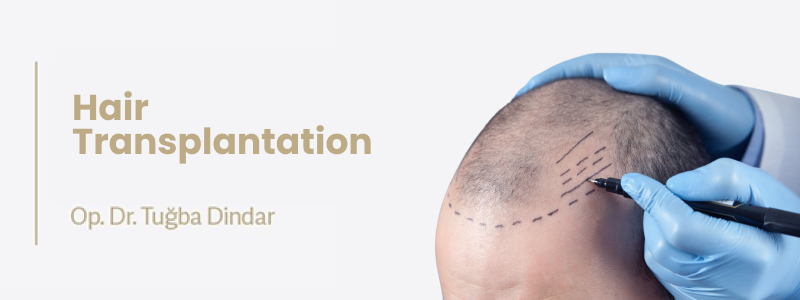
Hair transplantation is a surgical procedure intended to improve the appearance of areas affected by permanent hair loss in suitable individuals. Hair loss is a common condition that may affect not only appearance but also an individual's self-perception and expectations in daily life. However, the same approach is not appropriate for every type of hair loss. During the assessment, the cause of hair loss, the condition of existing hair, and the capacity of the donor area are evaluated together.
In Which Hair Loss Conditions Is Hair Transplantation Considered?
Hair transplantation may be considered particularly in cases of localized hair loss believed to be permanent, provided that sufficient donor hair is available. Male pattern hair loss, certain cases of hair loss following trauma or burns, and other selected conditions may be evaluated by a physician. However, deciding to proceed directly with transplantation without identifying the cause of hair loss is not appropriate.
Some types of hair loss may be temporary or may require investigation of an underlying medical condition first. Therefore, the condition of the scalp, the pattern and duration of hair loss, and whether the condition is progressing are assessed. In cases of sudden-onset, patchy, or unexplained hair loss, investigating the underlying cause is particularly important.
How Is Suitability for Hair Transplantation Assessed?
Suitability for hair transplantation is not determined solely by the size of the area affected by hair loss. A physician evaluates the individual's overall health, the cause of hair loss, and the characteristics of the donor area. The condition of the scalp, existing hair density, and the possibility of future hair loss may also be considered during the examination.
|
Assessment Criteria
|
Why Is It Considered?
|
|
Cause of hair loss
|
Helps determine the appropriate approach.
|
|
Progression of hair loss
|
Helps establish whether hair loss is continuing.
|
|
Donor area
|
Provides information about the available donor hair capacity.
|
|
Scalp condition
|
Helps assess the characteristics of the treatment area.
|
|
General health
|
Allows potential surgical risks to be evaluated.
|
|
Expectations
|
Helps establish realistic and individually appropriate goals.
|
Therefore, individuals should not determine on their own whether they are suitable candidates for hair transplantation based solely on general information available online. When necessary, an evaluation by a dermatologist or another relevant specialist may be recommended to investigate the cause of hair loss.
Why Is the Donor Area Important in Hair Transplantation Planning?
The donor area is one of the fundamental considerations in hair transplantation planning because it contains the hair follicles that may be used during the procedure. The capacity of this area is limited, and the future appearance of existing hair must also be considered.
What Is the Donor Area?
The donor area generally refers to the back and sides of the scalp, where hair follicles can be harvested. However, hair density, follicle structure, and distribution in this area differ between individuals. Therefore, donor capacity cannot be determined solely by the size of the area.
Why Is Hair Density in the Donor Area Evaluated?
Hair density helps assess the number of follicles available for transplantation and their potential distribution. Hair transplantation planning requires considering available donor resources not only in relation to current needs but also in light of possible future hair loss.
Why Is Preserving Existing Hair Important?
Preserving existing hair is important for maintaining a natural appearance. The condition of an individual's existing hair affects the overall appearance just as much as the transplanted hair. Therefore, planning should take into account the protection of existing hair and potential future changes.
Main Stages of Hair Transplantation
Hair transplantation involves several stages, beginning with assessment and planning, followed by harvesting follicles from the donor area, placing them in the recipient area, and monitoring the recovery process. The surgical approach may vary depending on the individual's hair characteristics and the technique used.
|
Stage
|
Primary Purpose
|
|
Examination and assessment
|
Evaluating hair loss and the donor area
|
|
Planning
|
Assessing the hairline, recipient area, and available donor resources
|
|
Follicle harvesting
|
Preparing the follicles obtained from the donor area
|
|
Recipient area preparation
|
Preparing the area where the follicles will be placed
|
|
Implantation
|
Transferring the prepared follicles to the planned areas
|
|
Follow-up
|
Evaluating recovery and hair growth
|
The scope of each stage may vary between individuals. Therefore, it is not appropriate to suggest that the procedure takes the same amount of time or requires the same number of follicles for everyone.
How Are the Hairline and Hair Density Planned?
The hairline is evaluated by considering facial features, age, existing hair characteristics, and the possibility of future hair loss. The aim is not simply to fill the frontal area but to create a natural-looking transition that is compatible with the individual's facial features.
Hair density may not be planned in the same way for every area. While a softer transition may be required along the frontal hairline, different density objectives may be considered in areas further back. The direction and angle of the hair follicles, as well as their compatibility with existing hair, are also important for the overall appearance.
Which Factors Determine the Hair Transplantation Technique?
When selecting a hair transplantation technique, hair characteristics, the donor area, the recipient area, existing hair density, and the physician's assessment are considered together. Different techniques may involve different application methods, but no single technique can be considered superior for everyone.
FUE Technique
In the FUE approach, hair follicles are individually extracted from the donor area, prepared, and placed in the intended recipient area. The details of the procedure may vary depending on the individual's hair characteristics and surgical plan. Donor area characteristics and the preservation of existing hair are important considerations when evaluating this approach.
DHI Technique
The DHI approach involves transferring harvested hair follicles to the recipient area using a specialized implantation instrument. The application method is planned according to hair characteristics and the features of the recipient area. Rather than ranking FUE and DHI in terms of superiority, the physician should determine the approach most appropriate for the individual.
What Should Be Considered During Recovery After Hair Transplantation?
During recovery, the specific instructions provided by the physician take priority. In general, patients may be advised to consider the following precautions:
- Avoid unnecessary touching, scratching, or pressure on the treated area.
- Wash and care for the scalp during the initial period according to the physician's instructions.
- Do not pick at scabs or irritate the treated area.
- Avoid using cosmetic or hair care products that have not been recommended.
- Follow the physician's advice regarding protection from excessive sun exposure.
- Resume strenuous physical activity only according to the healthcare team's recommendations.
- Follow restrictions regarding swimming pools, the sea, saunas, and similar environments.
- Avoid tight headwear or clothing that may rub against the treated area.
- Follow the prescribed medication instructions and do not take additional medications without medical advice.
- Contact a healthcare provider if severe pain, significant swelling, fever, excessive discharge, or any other unexpected symptoms develop.
What Is Aftercare and Recovery Like Following Hair Transplantation?
After hair transplantation, temporary changes such as redness, tenderness, and scab formation may occur in the treated area. The duration of these symptoms may vary from person to person. The appearance of transplanted hair during the initial period does not necessarily indicate how it will look in the following months.
Furthermore, recovery after hair transplantation is not limited to the initial healing of the scalp during the first few days. The adaptation of transplanted follicles to their new environment and their entry into the hair growth cycle require a longer period. Therefore, the results are evaluated during follow-up appointments rather than immediately after the procedure.
How Are Hair Transplantation Results Evaluated?
When evaluating results, hair density, distribution, hairline appearance, and compatibility with existing hair are considered together. In some individuals, the development of transplanted hair may become noticeable earlier, while in others it may take longer. Continued natural hair loss may also affect the long-term appearance.
What Information Should Be Shared with the Doctor Before Hair Transplantation?
Sharing relevant health information with the physician before hair transplantation helps assess potential risks. Individuals who regularly take medication should not discontinue it on their own. It is important to inform the physician about medical history, current medications, medications recently discontinued, and any supplements being used. The physician may request additional assessments in certain individuals. This allows the decision to be based not only on hair appearance but also on information about the individual's overall health.
It is also helpful to inform the physician about any previous hair-related procedures and medications or cosmetic products used.
|
Information
|
Why Should It Be Shared?
|
|
Regular medications
|
Helps evaluate potential risks.
|
|
Allergies
|
Allows assessment of products that may be used during the procedure.
|
|
Medical conditions
|
Helps review potential risks associated with the procedure.
|
|
Previous procedures
|
Provides information about the scalp's medical and procedural history.
|
Frequently Asked Questions
- Who May Be Suitable for Hair Transplantation?
Individuals with permanent hair loss and potentially sufficient donor hair may be considered for evaluation. The final decision is made following a medical examination.
- Why Is the Donor Area Important in Hair Transplantation?
The donor area is the source of hair follicles used for transplantation. Its capacity and the condition of existing hair influence the surgical plan.
- What Is the Difference Between FUE and DHI Hair Transplantation?
In both approaches, hair follicles are harvested from the donor area. The main difference lies in how the follicles are prepared and transferred to the recipient area.
- Can Redness and Scabbing Occur After Hair Transplantation?
Yes. Temporary redness, tenderness, and scab formation may occur after the procedure.
- When Can Hair Transplantation Results Be Evaluated?
Results are not evaluated during the early recovery period. The appearance changes over time due to the hair growth cycle.
- How Is a Natural Hairline Determined in Hair Transplantation?
The hairline is planned by considering facial features, age, existing hair characteristics, and the possibility of future hair loss.
- Can Hair Transplantation Be Performed for Every Type of Hair Loss?
No. The same approach is not suitable for every type of hair loss without first investigating its cause and progression.
Key Takeaways
- A decision to proceed with surgery should not be made without identifying the cause of hair loss.
- Donor area capacity is an important consideration in long-term planning.
- The hairline is evaluated in relation to facial features and existing hair characteristics.
- Neither FUE nor DHI is universally superior for all individuals.
- Recovery and hair growth may vary from person to person.
This content is intended for general informational purposes only and does not replace an individualized medical assessment. The cause of hair loss and suitability for surgical treatment should be evaluated following a physician's examination.