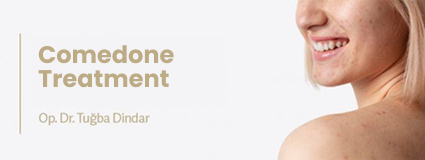
Black or white small bumps on the face are generally referred to as comedones. These lesions may resemble small oil-filled bumps and can appear almost anywhere on the face. They are most commonly seen in oilier areas such as the forehead and nose, and they can also form around hair follicles.
There are two main types of comedones:
- Closed comedones (whiteheads)
- Open comedones (blackheads)
In many people, especially when they look like simple black dots, comedones may not be taken seriously because they do not usually appear red or inflamed. However, excess sebum production can disrupt the skin's oil balance. As a result, pores may enlarge, allowing dirt, dead skin cells, and oil to accumulate-eventually leading to the formation of white or black comedones.
At first, comedones can be so small that they are barely noticeable. Over time, they may grow and create a rough or uneven skin texture, and this can quickly become an aesthetic concern.
Black or white small bumps on the face are generally referred to as comedones. These lesions may resemble small oil-filled bumps and can appear almost anywhere on the face. They are most commonly seen in oilier areas such as the forehead and nose, and they can also form around hair follicles.
There are two main types of comedones:
- Closed comedones (whiteheads)
- Open comedones (blackheads)
In many people, especially when they look like simple black dots, comedones may not be taken seriously because they do not usually appear red or inflamed. However, excess sebum production can disrupt the skin's oil balance. As a result, pores may enlarge, allowing dirt, dead skin cells, and oil to accumulate-eventually leading to the formation of white or black comedones.
At first, comedones can be so small that they are barely noticeable. Over time, they may grow and create a rough or uneven skin texture, and this can quickly become an aesthetic concern.
Whiteheads (Closed Comedones)
Closed comedones-commonly called whiteheads-are sometimes referred to as "oil bumps" or "oil spots." These lesions are typically white and unlike blackheads, the tip remains under the surface of the skin, which is why they are called "closed" comedones.
While blackheads may sometimes be squeezed out (although this is not recommended), closed comedones usually do not release easily, and improper attempts can irritate the skin.
In the early stage, they may not be visible. They usually become noticeable only after they grow to a size that can be seen on the skin's surface.
Main characteristics include:
- Less common than blackheads, but still widely seen
- Very frequent during puberty and adolescence
- Incorrect handling may increase the risk of post-inflammatory marks or scarring
- Similar prevalence in women and men
- Inflammation is not expected unless there is a viral contact or secondary infection
- Can Comedone Treatment Be Done During Adolescence?
Yes-comedone treatment can be safely performed during adolescence. It does not require waiting until puberty is over. In fact, removing comedones early can help maintain a healthier skin appearance in later years and may prevent pore congestion from worsening.
Comedone treatment can be carried out without affecting the skin's natural ability to repair itself, which is especially important during adolescence when the skin's oil production tends to be higher. Treatment can be performed regardless of skin type, including dry, normal, oily, or combination skin.
What Triggers Comedone Formation?
In many cases, comedones develop when the skin's pH balance and barrier function are disrupted, which can also affect sebum regulation. Common triggers include:
- Using harsh or aggressive exfoliants in skincare routines
- Choosing low-quality or unsuitable cosmetic products
- Washing the face with very hot water
- Increased sebum production during adolescence
- Hormonal imbalance
- Poor dietary habits
- Excess weight
- Use of medications containing corticosteroids or synthetic hormones
In some individuals, trying to remove whiteheads in unhygienic ways (squeezing, scratching, or damaging the skin) can lead to inflamed acne lesions. Similarly, certain cosmetic products may worsen pore blockage and increase oil accumulation.
Can Comedones Come Back After Treatment?
Comedone treatment is designed to remove existing comedones. However, if the underlying triggers continue-or if proper aftercare is ignored-comedones can reappear. In such cases, repeating the treatment is generally possible.
To reduce recurrence risk, it is important to:
- Avoid washing the face with very hot water
- Cleanse the skin consistently and gently
- Drink adequate water daily
- Avoid low-quality or comedogenic products
- Cleanse the face twice a day (once daily is usually not enough)
- Prefer mild exfoliation rather than aggressive peeling
Comedone Treatment in Tekirdağ (Near Istanbul)
For individuals searching for professional skincare in Turkey-especially those looking for treatment near Istanbul-Tekirdağ is an accessible and convenient location. A personalized skin assessment can help determine whether your concern is simple pore congestion or part of comedonal acne, and which treatment approach may be most appropriate.
If you would like to learn more about comedone removal, blackhead and whitehead extraction, or professional skin cleaning, you may request an appointment at our clinic in Tekirdağ.
Procedure Process
Comedone removal (comedone extraction) should always be performed by an experienced physician or a trained medical professional and should never be underestimated. The most appropriate approach may vary depending on the type of comedone (open comedones/blackheads or closed comedones/whiteheads).
Incorrect treatment methods-or attempting to squeeze comedones manually at home-may lead to skin infection, inflammation, post-inflammatory marks, and even permanent scarring. For that reason, professional treatment in a controlled clinical setting is strongly recommended.
In clinical practice, comedone treatment may involve the following approaches:
Local Peeling + Manual Extraction
This method combines classic professional skincare with targeted comedone extraction using sterile medical tools. First, the skin is cleansed thoroughly, and the pores are softened. A steam application may also be used to help open the pores and reduce skin resistance during extraction.
For open comedones (blackheads), a localized peeling treatment is often applied to loosen accumulated debris. Comedones around the pore opening can then be removed using gentle pressure and professional extraction techniques.
After extraction, a salicylic acid peel (or similar chemical peeling agents) may be applied to support exfoliation, reduce sebum buildup, and minimize the risk of recurrence. Since closed comedones (whiteheads) can be more difficult to remove, careful extraction is performed in a way that protects the pore structure and reduces trauma to the skin.
Aqua Peel (Hydrodermabrasion-Based Skin Cleansing)
Aqua Peel is considered one of the most advanced professional skin cleansing systems and can be highly effective for comedone treatment, especially when pore congestion is widespread.
Special aqua peel tips are used to reach clogged pores precisely. With the support of a vacuum-based system, comedones can be gently emptied and removed while helping to protect the skin and pore integrity.
A key advantage of this method is that it does not require deep penetration under the skin. Instead, it targets the pore content and surface congestion efficiently-making it a comfortable option for many patients looking for blackhead and whitehead removal without aggressive manipulation.
After the Procedure
It is equally important to know what to do after treatment, especially for patients who are wondering how comedones go away and how to prevent them from coming back. After comedone extraction and professional skin cleansing, the following aftercare recommendations should be considered:
- To keep the skin free from dirt and dead cells, cleanse your face twice daily using products suitable for your skin type.
- For the first 24 hours, avoid wearing makeup, and do not apply any cosmetic products to the treated area without consulting your doctor.
- It is not recommended to squeeze or pick at the skin, including any remaining blackheads or newly forming comedones, as this may increase the risk of infection and scarring.
- Use clean pillowcases to help keep the skin hygienic after treatment and reduce bacterial exposure.
- Always remove makeup thoroughly before going to bed to prevent pore blockage and comedone recurrence.
- Do not neglect high-SPF sunscreen to protect the skin from harmful UV exposure and to support healthy healing after treatment.
It should also be noted that comedone treatment is a repeatable procedure. If comedones reappear, you may schedule a follow-up session for further professional cleansing. For more information about comedone treatment in Turkey or to request an appointment at our clinic in Tekirdağ (near Istanbul), please contact us.