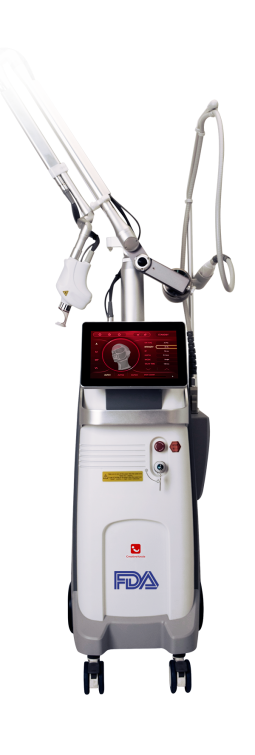
Fraxis Duo is a laser system that combines CO₂ laser and fractional microneedling RF technologies on the same platform. These technologies may be used in different procedures targeting the skin surface and deeper tissue layers. When evaluating Fraxis Duo features, both the technical capacity of the device and the clinical purpose for which each energy system will be used should be taken into consideration. The treatment method and parameters are determined by the physician according to the individual’s skin structure, treatment area, and clinical assessment.
What Is Fraxis Duo Used For?
Fraxis Duo is a system that provides CO₂ laser and fractional microneedling RF technologies on the same platform for certain skin and soft tissue applications. When considered for dermatological and related medical procedures, the aim is to select the energy method appropriate for the individual’s concern or treatment goal.
Following clinical assessment, laser or RF technology may be used for different conditions such as acne scars and scar appearance, wrinkles, the appearance of pores, certain pigmentation concerns, and irregularities on the skin surface. Depending on the technical configuration of the device, handpiece options that may be used in surgical and gynecological applications may also be available.
The areas of use mentioned here do not mean that a particular procedure is suitable for every individual or that a specific result can be expected. Skin type, treatment area, characteristics of the existing lesion, previous procedures, healing tendency, and the individual’s general health status are evaluated together. Particularly in energy-based procedures, treatment parameters should be planned individually after physician examination rather than being determined according to a standardized setting.
Fraxis Duo Features
Fraxis Duo features can be evaluated in terms of the presence of two separate energy systems on the same platform and the ability to adjust different treatment parameters for each system.
| Feature |
Technical Value |
| CO₂ laser wavelength |
10,600 nm |
| CO₂ laser power |
Up to 30 W |
| CO₂ laser pulse duration |
20–5,000 µs |
| Fractional scanning area |
1 × 1–20 × 20 mm |
| RF frequency |
2 MHz ± 10% |
| RF power |
Up to 25 W ± 10% |
| RF application duration |
50–950 ms |
| Microneedle thickness |
0.25 mm |
| Adjustable needle depth |
0.5–3.5 mm |
| Depth adjustment |
0.1 mm increments |
The values shown in the table above indicate the technical capacity of the device and should not be interpreted directly as treatment parameters to be applied. Some handpiece and cartridge options listed in technical documentation may vary depending on the device configuration.
CO₂ Laser Technology in Fraxis Duo
Fraxis Duo CO₂ laser uses a CO₂ laser source operating at a wavelength of 10,600 nm. The strong absorption of CO₂ laser light by water in tissue allows a controlled thermal effect to be created in the targeted area. In fractional use, energy is distributed to create microthermal zones rather than being applied uniformly across the entire skin surface.
This mechanism may initiate a controlled tissue response and biological changes associated with healing processes in the treatment area. Statements regarding collagen synthesis and skin renewal should be considered within the context of this mechanism. It should also be kept in mind that outcomes may vary from person to person and that a definite skin renewal result cannot be guaranteed.
Fractional Scanning Structure
The fractional scanning structure allows laser energy to be distributed to specific micro-areas. According to the technical specifications, the minimum pixel size is 100 microns, the spot spacing is 0.1–2.0 mm, and the treatment area ranges from 1 × 1 to 20 × 20 mm. Scanning density, pulse duration, and other parameters are determined by the physician according to the treatment purpose and the characteristics of the treatment area.
For this reason, when evaluating a fractional CO₂ laser device, it is not sufficient to consider wavelength alone. The scanning system, energy settings, handpiece options, and technical features that determine the treatment area should be assessed together.
Fractional Microneedling RF Technology in Fraxis Duo
The microneedling RF system is designed to deliver high-frequency energy to predetermined depths in the skin through small electrodes. In this system, the Fraxis Duo RF component operates at 2 MHz ± 10%, and RF energy is delivered through a bipolar microneedling handpiece. The controlled thermal effect created in the tissue is associated with biological responses that depend on the applied energy and depth.
Structure of the Microneedling Handpiece
The microneedling handpiece consists of 0.25 mm-thick electrodes, and different needle configurations may be used depending on the technical configuration of the system. The technical documentation includes a 25-electrode handpiece as well as an optional 10-electrode option. Needle penetration depth can be adjusted between 0.5 and 3.5 mm in 0.1 mm increments.
Delivery of RF Energy to the Tissue
RF energy is delivered to the tissue after the microneedles reach the selected depth and energy is applied according to the specified parameters. According to the technical documentation, RF emission duration ranges from 50 to 950 ms, and power is stated as up to 25 W. Treatment depth and energy level are determined by taking the individual’s skin and tissue characteristics into account.
The Role of CO₂ Laser and Microneedling RF Systems Within the Device
Although both technologies are available within the same device, CO₂ laser and RF are not the same type of energy. CO₂ laser uses optical energy, while the RF system uses high-frequency electrical energy. FDA records describe Fraxis Duo as consisting of two separate systems, a laser system and a high-frequency system, and indicate that these two systems are not operated simultaneously. This technical distinction is important when evaluating the device clinically.
Functions of Fraxis Duo Treatment Handpieces
The primary function of the treatment handpieces is to deliver the selected energy type to the targeted area in a manner appropriate to the treatment method.
| Handpiece or System |
Technical Function |
Main Difference in Application |
| Fractional CO₂ handpiece |
Directs laser energy into micro-areas |
Fractional laser application on the surface |
| CO₂ surgical handpieces |
Allow the laser beam to be used with different spot options |
Handpiece structure differs from fractional scanning |
| Bipolar microneedling RF handpiece |
Delivers RF energy through electrodes |
Energy is transferred to the tissue through microneedles |
| 25-electrode RF handpiece |
Allows treatment with a multi-electrode array |
Wider needle array |
| 10-electrode RF handpiece |
Allows treatment with fewer electrodes |
Narrower needle array |
Assessment of Skin and Tissue Characteristics When Using Fraxis Duo
Skin and tissue characteristics are among the primary factors considered when determining the treatment method and parameters. Skin type, thickness, sensitivity, tendency toward pigmentation, treatment area, and the characteristics of the existing skin concern are evaluated together.
For example, targeting superficial and deeper effects during laser treatment may require different parameters. In RF applications, needle depth, energy intensity, and treatment duration are assessed. For this reason, procedures performed under the same treatment name are not expected to use identical settings for every individual.
In concerns such as acne scars, scar appearance, wrinkles, or pores, the characteristics of the condition are assessed first. The method considered appropriate is then selected according to the tissue target and the individual’s characteristics. The aim is to seek a clinically meaningful change in the appearance of the existing concern; however, it cannot be guaranteed that scar tissue will be completely removed, that the skin will definitely be renewed, or that the outcome will be permanent.
Factors such as medications being used, previous procedures, active infection, or existing skin conditions should also be evaluated by the physician before the procedure. Redness, sensitivity, edema, or pigmentation changes that may occur after treatment can vary according to individual characteristics and treatment parameters.
From a clinical perspective, the technical capacity of the device and medical necessity should be considered separately. For example, the availability of the Fraxis Duo laser option does not mean that laser treatment is appropriate for every skin concern.
Frequently Asked Questions
Fraxis Duo combines CO₂ laser and fractional microneedling RF technologies on the same platform.
The CO₂ laser system operates at a wavelength of 10,600 nm.
The RF system operates at 2 MHz ± 10%.
Yes. According to the technical specifications, it can be adjusted between 0.5 and 3.5 mm in 0.1 mm increments.
No. CO₂ laser uses optical energy, while RF uses high-frequency electrical energy.
No. Parameters are determined after evaluating the individual’s skin, tissue, and treatment area.