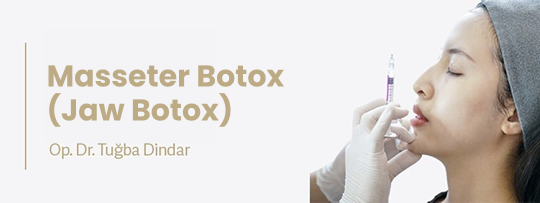
Overactivity of the muscles in the jaw area may lead to both aesthetic and functional concerns. Many people explore different treatment options due to habits such as clenching the teeth, grinding the teeth at night or having prominent jaw muscles. One of the procedures frequently considered in recent years is masseter Botox.
A commonly asked question is: what is jaw Botox? This procedure is based on injecting botulinum toxin into specific points of the masseter muscle, which plays a role in chewing. The purpose of the procedure may vary from person to person.
Today, masseter Botox treatments may be considered not only for aesthetic concerns but also for managing certain conditions associated with excessive activity of the jaw muscles. However, because each individual’s facial anatomy, muscle structure and expectations are different, assessment by a qualified physician before the procedure is important.
Who May Be Suitable for Masseter Botox?
As with any aesthetic or medical procedure, selecting suitable candidates is important. One of the most frequently searched questions is who can receive masseter Botox. The answer may vary depending on the individual’s symptoms, the structure of the jaw muscles and the findings of the clinical assessment.
In individuals whose masseter muscles are more prominent or active than usual, the jawline may appear wider or more angular. Some people may also involuntarily clench their teeth during the day or at night. Over time, this may contribute to fatigue in the jaw area, morning discomfort or tooth wear.
Following professional assessment, the procedure may be considered for individuals who:
- Clench their teeth
- Grind their teeth at night
- Have prominent enlargement of the jaw muscles
- Would like a softer-looking jawline
- Have excessive muscle activity in the jaw area
- Experience reduced quality of life due to bruxism
It is important to remember that not every square-shaped face is caused by the masseter muscles. In some individuals, bone structure may be the main determining factor. For this reason, facial anatomy should be assessed as a whole.
Conditions Associated with Overactive Masseter Muscles
| Condition |
Possible Symptoms or Concerns |
May Require Assessment? |
| Teeth-clenching habit |
Jaw fatigue and muscle tension |
Yes |
| Night-time teeth grinding |
Morning jaw pain and tooth wear |
Yes |
| Masseter muscle enlargement |
A wider-looking jaw |
Yes |
| Increased chewing-muscle activity |
A feeling of tightness in the jaw area |
Yes |
| A prominent square-shaped face |
Aesthetic concerns |
May vary by individual |
When Is Masseter Botox Considered?
This procedure may be considered for different purposes. Functional concerns may be the main priority for some individuals, while aesthetic expectations may be more significant for others.
Teeth Grinding
Involuntary teeth grinding at night may cause the jaw muscles to work intensely for prolonged periods. In some patients, bruxism Botox may be considered among the available options during assessment. However, the same approach may not be appropriate for every case of teeth grinding.
Teeth Clenching
Unconsciously clenching the teeth during the day is relatively common. This habit may become more noticeable during periods of stress. Individuals seeking information about Botox for teeth clenching should first undergo a comprehensive assessment.
Morning Jaw Pain
Excessive muscle activity may be present in individuals who wake up with pain, stiffness or fatigue in the jaw area. Identifying the underlying cause is important when selecting an appropriate approach.
Masseter Muscle Hypertrophy
An increase in the size of the masseter muscle is known as hypertrophy. This may cause the lower part of the face to appear wider. In some individuals, this appearance may be the main reason for considering masseter muscle Botox.
Softening a Square-Shaped Jawline
The chewing muscles are among the structures that affect facial shape. In individuals with prominent muscle volume, jaw-slimming Botox may be considered following professional assessment. However, it should be remembered that facial shape is not determined by the muscles alone, as bone structure also plays an important role.
How Is Jaw Botox Performed?
Before the procedure, the structure of the jaw muscles is assessed and the injection points are identified. The individual may be asked to clench their jaw so that the borders of the masseter muscle can be seen more clearly. Botulinum toxin is then injected into the selected areas using fine needles.
The procedure is generally completed within a short period, and many people may return to their daily activities on the same day.
The term jaw-muscle Botox is commonly used to describe injections applied to the masseter muscle. However, the dose and injection plan may vary for each individual.
Some people search for regional terms such as “masseter Botox Antalya” when seeking information about the procedure. Regardless of the clinic or location, the most important consideration is that the procedure should be performed for suitable candidates, by experienced physicians and according to an individualised treatment plan.
Recovery After Jaw Botox
The recovery process following the procedure generally does not restrict daily life for an extended period. However, because each individual’s muscle structure, the dose administered and the body’s response may differ, the process can vary from person to person. It is therefore important to follow the physician’s post-procedure recommendations and attend any scheduled follow-up appointments.
| Stage |
Possible Effects |
Recommended Considerations |
| First 4–6 hours |
Mild tenderness or small areas of redness may occur at the injection sites. |
It is important not to massage the treated area and to follow the physician’s recommendations. |
| First 24 hours |
Daily activities can usually continue as normal. Mild tenderness may be experienced. |
Avoiding strenuous physical activity, saunas or very hot environments may be recommended. |
| 2–3 days |
Tenderness generally decreases considerably. The treated areas retain their natural appearance. |
Procedures or activities that could irritate the area should be avoided. |
| 1 week |
Changes in muscle activity may gradually begin to be noticed. |
A recommended follow-up appointment should not be missed. |
| 2–4 weeks |
The effects of the procedure may become more noticeable. Aesthetic or functional changes may be assessed more clearly during this period. |
The results should be evaluated by a qualified physician. |
One of the most frequently asked questions is how the period after jaw Botox progresses. Although many people can return to their social activities on the same day, the recovery process and the time required for the effects to appear may vary according to individual characteristics.
What Should Be Considered Before Jaw Botox?
The assessment carried out before the procedure is important both for supporting safety and for planning expectations appropriately. During the examination, the individual’s medical history, current medications and jaw-muscle structure are evaluated in detail.
The main points to consider before the procedure include:
- It is important to provide the physician with complete information about your current health and any medications you are taking.
- If you have previously received a botulinum toxin treatment, sharing when it was administered may contribute to the planning process.
- If you clench or grind your teeth, explaining how frequently this occurs may be useful during the assessment.
- Any history of surgery or trauma involving the jaw area should be disclosed to the physician.
- Professional medical advice should be obtained regarding procedures considered during pregnancy or breastfeeding.
- Clearly explaining your expectations from the procedure helps support an individualised treatment plan.
After Jaw Botox
After the procedure is completed, most people can return to their daily activities within a short period. However, following certain post-procedure recommendations may help support a smoother recovery process.
During the first few hours, it is important to avoid applying unnecessary pressure to the injection area and to follow the care instructions provided by the physician. During the first day, avoiding strenuous exercise, prolonged exposure to very hot environments and activities that may irritate the treated area may be recommended.
The effects of the procedure do not appear immediately. Changes in muscle activity usually develop over several days, and the results may be assessed more clearly after a certain period. For this reason, rather than repeatedly checking the appearance in the mirror during the early stage, it may be more appropriate to wait until the follow-up period recommended by the physician.
Regular follow-up examinations also allow the effects of the procedure to be assessed and, where necessary, future treatment plans to be tailored to the individual.
Are There Any Possible Side Effects of Jaw Botox?
As with any medical procedure, botulinum toxin injections may involve certain risks and side effects that can vary from person to person. Although these effects are often mild and temporary, it is important that the procedure is performed by experienced physicians following an appropriate anatomical assessment.
Some individuals may experience temporary tenderness, mild redness, bruising or swelling at the injection site. These effects are generally temporary and may resolve on their own within a short period.
In rare cases, temporary weakness while chewing or unexpected changes in muscle function may occur. For this reason, the dose and injection points should be planned individually.
A detailed pre-procedure assessment, a realistic discussion of expectations and adherence to the physician’s post-procedure recommendations are important steps in terms of both safety and satisfaction.
Frequently Asked Questions
- How Long Does Jaw Botox Take?
The procedure is generally completed within 10–20 minutes, although the duration may vary depending on the individual’s anatomy and the injection plan. The examination and assessment time are not included in this duration.
- Is the Masseter Botox Procedure Painful?
As the procedure is performed using fine needles, most people describe only a mild pricking sensation. Pain perception may vary from person to person.
- When Do the Effects of Masseter Botox Begin to Appear?
Although changes in muscle activity generally begin during the first few days, the effects of the procedure become more noticeable within 2–4 weeks for most people.
- Does Jaw Botox Slim the Face?
In individuals with prominent masseter muscles, changes in muscle volume may create a softer appearance in the lower facial contour.
- Can Masseter Botox Be Used for Teeth Clenching?
Yes, it may be considered among the treatment options for some individuals. However, the same approach may not be suitable for every case of teeth clenching.
- Can Jaw Botox Be Repeated?
Yes. In suitable individuals, repeat treatment may be planned following assessment by a qualified physician.
- Are the Results of Jaw Botox Permanent?
No, the results are not permanent. The duration of the effects may vary depending on individual characteristics, muscle activity and the dose administered.
- Does Jaw Botox Cause Pain While Eating?
Mild tenderness may be experienced around the injection area during the first few days. However, most people can return to their usual eating routine within a short period.
Key Points
- Masseter Botox is a procedure that may be considered for suitable candidates experiencing aesthetic or functional concerns associated with excessive jaw-muscle activity.
- Treatment planning should consider not only the size of the jaw muscles but also facial anatomy, chewing function and the individual’s expectations.
- Prominent jaw muscles do not always require treatment. In some individuals, this appearance may be part of their natural facial structure.
- Although most people can return to their daily activities within a short period, the recovery process may vary according to individual characteristics.
- Assessment by a qualified physician before the procedure is important for planning the treatment safely and appropriately.
This content has been prepared for informational purposes only. It does not constitute medical diagnosis or treatment advice.