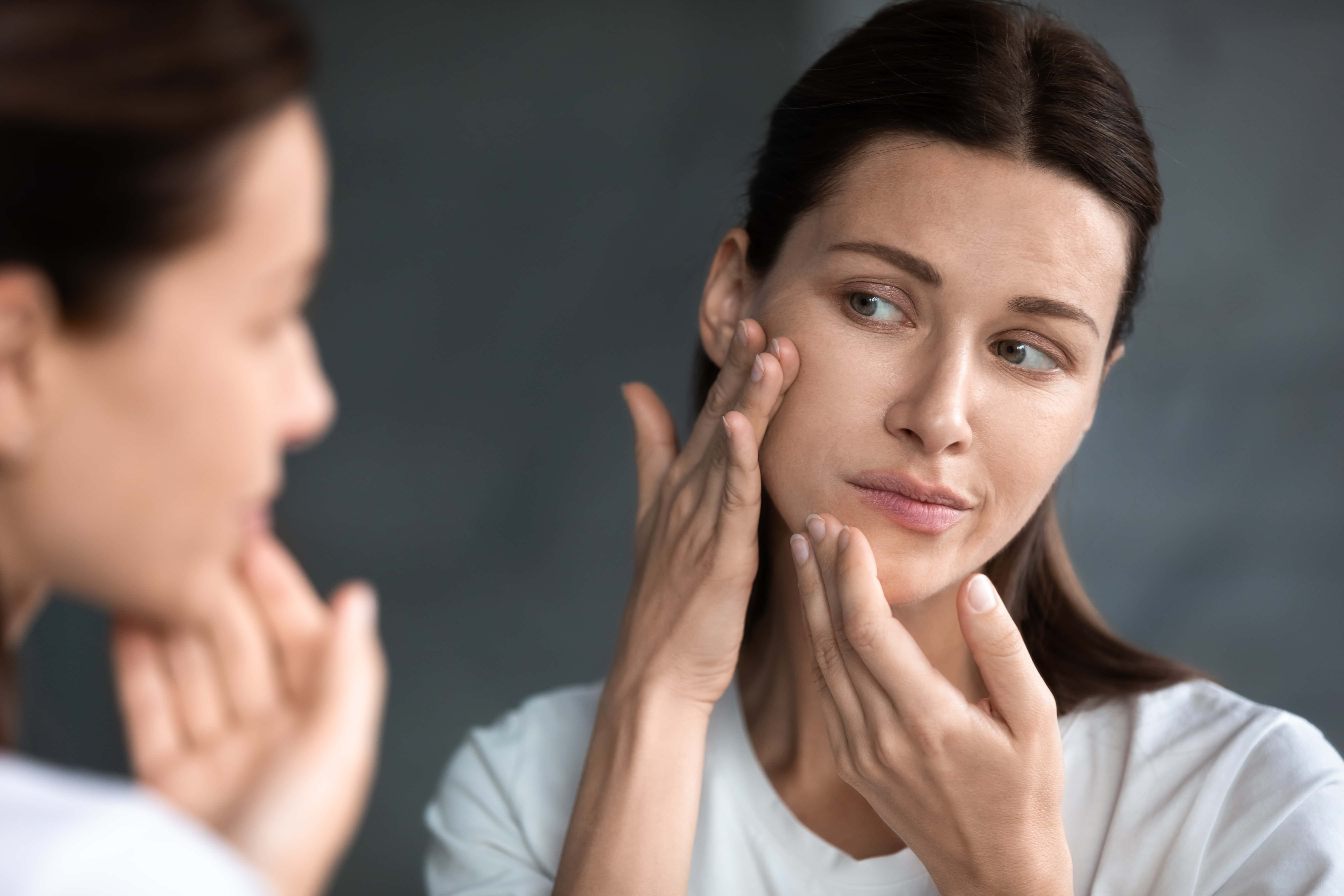
Changes in facial volume cannot be explained by the reduction of a single tissue type; fat tissue, bone structure, skin, ligaments, and other supporting tissues may change in different ways over time, affecting the three-dimensional appearance of the face. Therefore, when evaluating facial volume loss, it is necessary to consider facial anatomy as a whole. Age, genetic characteristics, weight changes, and living conditions may influence the timing of these changes.
Understanding facial anatomy helps explain why volume changes do not occur in the same areas or to the same extent in everyone. The face has a layered structure consisting of skin, fat tissue, connective tissues, muscles, deep fat compartments, and bones. These layers do not function independently of one another; changes in one layer may affect the position and support of other structures.
Main Causes of Facial Volume Loss
The main explanation for what causes facial volume loss is that changes in fat tissue, bone remodeling, and alterations in the skin and supporting tissues all play a role. It would be inaccurate to say that all facial fat tissues decrease in the same way with age. While volume may decrease in some fat compartments, displacement or relative prominence may occur in others. Therefore, changes in facial volume are regional and individual processes.
Changes in Facial Fat Tissue
Changes in facial fat tissue occur as the volume and position of different fat compartments change over time. Facial fat loss may become particularly noticeable in certain superficial and deep fat compartments; however, the same degree of loss is not expected throughout the entire face. Fat tissue may behave differently in areas such as the midface, temples, forehead, around the eyes, and jaw. Additionally, not only a reduction in fat but also changes in its distribution between anatomical compartments may affect facial contours.
Age-Related Changes in Facial Bone Structure
Age-related remodeling of facial bones may affect the support and position of the overlying soft tissues. Because bones form the underlying framework of the face, regional changes in bone structure also alter the foundation supporting fat tissue and skin. Different degrees of bone remodeling may occur over time, particularly around the eye sockets, upper jaw, and lower jaw. Therefore, volume changes should not be evaluated solely in terms of soft tissues.
Changes in Skin and Supporting Tissues
Changes in the skin and supporting tissues are other important factors affecting the perception of facial volume. Over time, changes in the structure of collagen and elastic fibers, reductions in skin thickness and elasticity, and alterations in connective tissue characteristics may occur. Although these changes do not directly indicate volume loss, they may affect the ability of tissues to provide support. As a result, changes in the skin surface and facial contours may accompany facial volume reduction.
|
Facial Area
|
Anatomical Structures That May Affect Volume Perception
|
Features Considered During Evaluation
|
|
Forehead and temples
|
Superficial/deep fat compartments, bone contours
|
Right-left symmetry
|
|
Eye area
|
Fat compartments, orbital bone structure, skin
|
Anatomy around the eyes
|
|
Midface
|
Cheekbones, fat compartments, ligaments
|
Cheekbone projection
|
|
Lower face
|
Jawbone, fat tissue, muscles, and ligaments
|
Relationship between the jawline and soft tissues
|
The Effect of Weight Changes on Facial Volume
Weight changes, particularly significant weight loss, may affect the amount and distribution of facial fat tissue. Since fat distribution varies from person to person, the same amount of weight loss does not produce identical facial changes in everyone. After weight loss, some individuals may experience reduced fullness around the cheeks and temples; however, these changes vary between individuals. Therefore, volume loss in the cheeks should not be attributed solely to aging.
Nutritional deficiencies and certain health conditions may also affect body composition. When changes occur over a short period, the individual's overall health status should be evaluated.
Evaluation of Facial Volume Loss
Because not every facial hollow has the same anatomical cause, evaluation should involve examining the affected area together with the surrounding tissues. For example, volume loss in the temples may be associated with changes in fat tissue, but bone contours, skin characteristics, or an individual's natural facial anatomy may also influence their appearance.
Similarly, an appearance described as facial hollowing does not always indicate actual fat loss. Clinical evaluation considers frontal and side views of the face, differences between the two sides, skin characteristics, fat distribution, bony prominences, and the relationship between soft tissues. This distinction is important.
|
Evaluation Criteria
|
Main Aspects Examined
|
|
Timing
|
When the change began and whether it has progressed
|
|
Distribution
|
Whether the change occurs in a single area or multiple areas
|
|
Symmetry
|
Whether there is a noticeable difference between the right and left sides
|
|
Accompanying findings
|
Weight changes, skin changes, or other physical symptoms
|
|
Previous appearance
|
Comparison of anatomical changes over time using photographs
|
Individual Differences in Facial Volume Loss
The timing and prominence of facial volume changes vary from person to person because facial aging is not a uniform process that follows a standard sequence. Factors such as genetics, the shape of facial bones, the distribution of fat compartments, skin characteristics, sun exposure, and lifestyle may influence how this process appears. The literature indicates that facial aging can vary between individuals.
Therefore, it is not possible to provide the same explanation for facial hollowing in everyone. Regional volume changes may differ from person to person. Individuals in the same age group may have different facial anatomy. The amount and distribution of facial fat tissue, characteristics of bone structure, and the skin's supporting capacity are important for understanding these differences.
Facial aging should not be considered solely as a reduction in volume. It results from the interaction of changes in the skin, fat, muscles, connective tissues, and bone structure. Accordingly, when evaluating changes in a particular facial area, considering the underlying anatomical structures together provides a more appropriate approach.
Frequently Asked Questions
- Is facial volume loss caused only by aging?
No. Weight changes, genetic characteristics, certain health conditions, and living conditions may also affect facial volume.
- In which areas can facial volume loss be more noticeable?
It may occur to varying degrees in areas such as the forehead, temples, around the eyes, cheeks, and jaw.
- Are facial volume loss and skin sagging the same thing?
No. Volume changes are associated with deeper tissues, while skin sagging is particularly related to the characteristics of the skin and supporting tissues.
- Can losing weight cause facial volume loss?
Yes. Significant weight loss may lead to a reduction in facial fat tissue, but its effect on facial volume varies from person to person.
- Do facial bones change with age?
Yes. Regional remodeling and volume changes may occur in facial bones with aging.
- Is sudden facial volume loss normal?
Sudden and noticeable changes may not be explained by the normal aging process and require medical evaluation, particularly if other symptoms are present.
This content has been prepared for general informational purpo